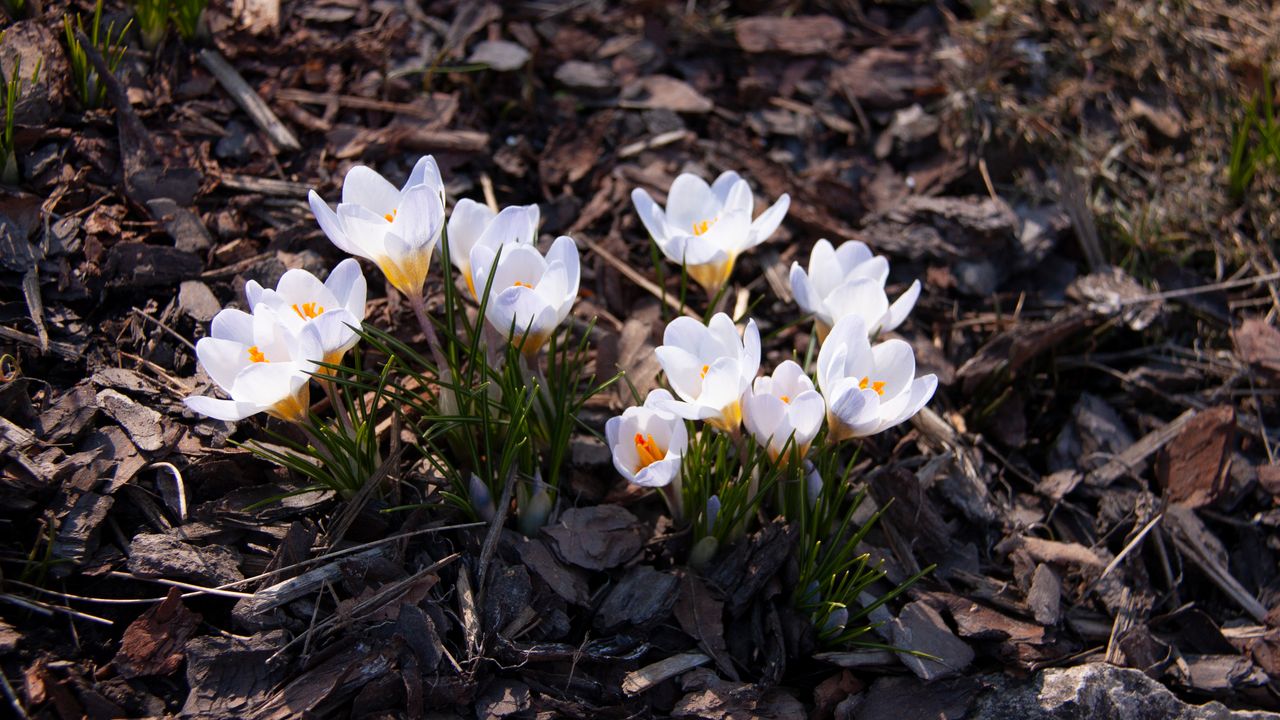
Per dollar spent, nothing changes how a property looks more than fresh mulch over a clean edge. It holds moisture through August, keeps weed seed in the dark, evens out soil temperature, and makes a tired bed read as maintained from the street. It is also the job we most often get called in to fix, because there are three ways to do it badly and all three are common.
The first is depth. Two to three inches is the number. Less than that and light reaches the soil, weed seed germinates, and you are weeding a mulched bed by July. More than about four inches and you have made a sponge that sheds water rather than letting it through, and roots come up into the mulch layer looking for it — which leaves them shallow, exposed, and the first thing to suffer in a dry spell. Topping up an existing bed usually means adding an inch, not another full load.
The second is the volcano. You have seen it on half the properties in town: mulch piled a foot up the trunk of a young maple in a neat cone. Bark above the root flare is not built to sit wet against organic material. It stays damp, it softens, it rots, and it lets in disease and rodents — and the tree responds by sending roots out into the mulch and around the trunk, where they eventually girdle the very tree they came from. It is a slow way to kill something you paid to plant. Mulch should be pulled back so the root flare is visible, with the trunk sitting in a shallow dish rather than a cone.
The third is what is underneath. Mulch laid over a bed full of weeds is a month of looking good followed by the same weeds coming through, because perennial weeds like quackgrass and bindweed simply grow up through it. The bed gets weeded and edged first, every time. That is most of the labour in the job and it is the part that decides whether it still looks right in September.
On material: hardwood bark is the standard around here, breaks down into the soil and feeds it, and holds colour reasonably. Dyed mulch holds colour far longer, which matters if you want one application to carry the whole season. Cedar breaks down slowly and smells good. Stone never breaks down, which sounds like an advantage until you want to change the planting or you notice it reflects heat into the shrubs behind it. For anything you actually intend to grow in, organic mulch beats stone.
A crisp edge is doing more work than people credit. A spade edge or a cut machine edge along the bed line is what makes mulch look deliberate instead of dumped, and it keeps the turf from creeping into the bed for the rest of the season. We cut the edge as part of the job rather than as an extra.
Tree Services & Landscaping mulches, edges and maintains beds across Holland, Zeeland, Grand Haven, Saugatuck, South Haven, Allegan and Grand Rapids. Free estimates — call (616) 218-0091.